


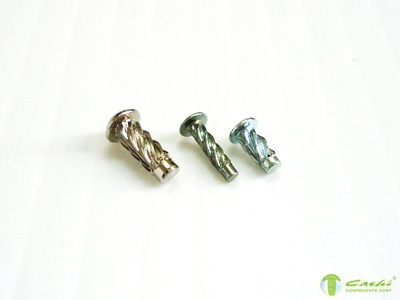
Suitable for Securing Nameplates and Thin Panels
TYPE-U fasteners are mainly used for securing thin signage plates, equipment nameplates, identification plates, and decorative panels. They provide reliable positioning while requiring minimal installation space.
Compact Head Design Maintains a Clean Appearance
TYPE-U fasteners typically use low-profile, flat, or rounded head designs that minimize protrusion after installation. This helps reduce interference with text, graphics, and the overall appearance of the nameplate.
Combines Fastening and Decorative Functions
In addition to basic fastening, TYPE-U fasteners can be matched to product housings, nameplates, and brand identity designs through different head shapes, surface finishes, and plating colors, helping the fastening point blend into the overall appearance.
Multiple Installation Methods Available
Depending on product structure, hammer-in, press-in, screw-in, or self-tapping TYPE-U designs can be selected. Hammer-in and press-in types are suitable for fast assembly, while threaded types are more suitable when greater pull-out resistance or removability is required.
Compatible with Different Base Materials
Depending on shank and point design, TYPE-U fasteners can be used with sheet metal, plastic housings, wooden products, die-cast parts, and other specified materials.
Because hardness, ductility, and thickness vary between base materials, the appropriate hole diameter and installation method should be confirmed before final selection.
Low-Profile Head Reduces Protrusion
Low round head or flat head designs help reduce the installed height, making them suitable for equipment housings, control panels, and products with limited surface clearance.
Can Provide Positioning and Pull-Out Resistance
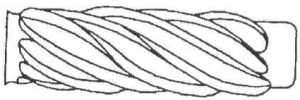
Smooth-shank TYPE-U fasteners can achieve a press fit with closely controlled mounting holes, while ring-grooved, knurled, or threaded shanks can increase friction and engagement with the hole wall, helping reduce the possibility of pull-out.
Actual pull-out performance should be tested according to base material, hole diameter, insertion depth, and shank structure.
May Eliminate the Need for Additional Nuts
Press-in, self-tapping, or other TYPE-U fasteners designed to engage directly with the base material generally do not require a nut on the back side, making them suitable for applications with limited rear-side access or internal space.
Suitable for High-Volume Assembly
TYPE-U fasteners with a simple structure can be used with fixtures, press-in equipment, or automated feeding systems, reducing manual assembly steps and making them suitable for high-volume nameplate and signage installation.
Actual automated feeding capability should still be tested according to head type, overall length, center of gravity, and installation equipment.
Multiple Materials and Surface Finishes Available
Depending on strength, appearance, rust resistance, electrical conductivity, and operating environment, TYPE-U fasteners can be produced in carbon steel, stainless steel, brass, copper, or aluminum, with finishes such as nickel plating, chrome plating, copper plating, black oxide, or polishing.
Customization Based on Drawings and Samples
TYPE-U fasteners can be customized according to customer engineering drawings, nameplate samples, or existing fasteners, including head shape, head diameter, shank diameter, overall length, thread profile, knurling, point structure, material, tolerances, and surface treatment.
Common Applications
TYPE-U fasteners are commonly used in:
- Machinery equipment nameplates
- Identification plates for electronic and electrical products
- Enclosure and cabinet identification plates
- Automotive and motorcycle component nameplates
- Home appliance specification labels
- Instrument and precision equipment panels
- Identification plates on metal and plastic housings
- Brand plates on furniture and wooden products
- Decorative plates for bags and hardware products
- Trademark plates and product identification tags
- Thin decorative panels
- High-volume nameplate assembly lines
Key Considerations When Selecting TYPE-U
Before selection, confirm whether the TYPE-U fastener will be installed by hammering, pressing, or screwing, and provide the nameplate hole diameter, plate thickness, base-material type, base-material thickness, and available fastening depth.
For press-in or hammer-in designs, the fit tolerance between the hole diameter and shank diameter is especially important. If the hole is too small, the nameplate may deform, the base material may crack, or the fastener may bend. If the hole is too large, retention force may be insufficient, resulting in looseness or pull-out.
When the nameplate material is thin or relatively soft, head size and installation pressure should be properly controlled. A head that is too small may not fully cover the mounting hole, while an oversized head or excessive installation force may cause denting or deformation of the plate.
If the product requires maintenance or disassembly, a threaded screw-in TYPE-U design should be considered first. Press-in or hammer-in fasteners may enlarge or damage the original hole after removal and may not be suitable for repeated use.
If the TYPE-U head is chrome plated, nickel plated, polished, or given another decorative finish, installation tools should be designed to avoid scratching the surface. Protective fixtures or dedicated press heads can be tested before mass production to ensure appearance quality.
For outdoor, humid, chemical, or dissimilar-metal contact environments, the fastener material, surface treatment, corrosion resistance, and risk of galvanic corrosion should also be evaluated.


