


Developed for Specific Assembly Requirements
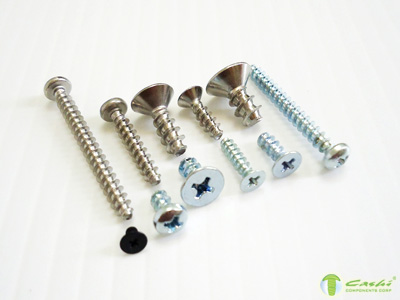
FAST-HP can be designed according to internal product space, workpiece thickness, fastening position, and mating components. The screw head, shank, thread, and point structure can be adjusted to suit assembly locations where standard screws cannot be used directly.
Supports Manufacturing from Engineering Drawings and Physical Samples
Specifications can be evaluated based on customer-provided 2D drawings, 3D models, or physical samples. Head type, thread specifications, overall length, shank diameter, tolerances, and functional structures can be confirmed to reduce the risk of incompatibility between custom components and existing assemblies.
Customizable Head and Shank Structures
Special head shapes, drive recesses, shoulders, positioning sections, stepped shanks, or reduced-diameter structures can be designed according to installation tools, appearance, and available space, allowing the screw to provide fastening, guiding, positioning, or stopping functions.
Multiple Mechanical Functions Can Be Integrated
In addition to basic fastening, FAST-HP can integrate positioning, guiding, limiting, anti-rotation, retention, or component-spacing functions according to product design, allowing a single screw to perform multiple mechanical roles.
The actual functions that can be integrated should still be evaluated according to structural, loading, and manufacturing conditions.
Suitable for Limited Installation Space
Head height, head outside diameter, shank length, or tool-access method can be adjusted to suit narrow internal spaces, densely arranged surrounding components, or applications with limited allowable protrusion height.
Multiple Thread and Point Designs Available
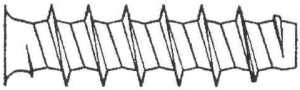
Depending on the mating workpiece and fastening method, machine threads, self-tapping threads, fine threads, coarse threads, or special thread forms can be selected, together with flat ends, pointed ends, pilot points, or other specially formed point designs.
Multiple Material and Surface Treatment Options
Different metal materials and surface treatments can be selected according to product strength, weight, rust resistance, corrosion resistance, electrical conductivity, appearance, and operating environment.
Strength Can Be Adjusted According to Load Requirements
Suitable materials, heat treatment, and effective thread engagement length can be evaluated according to tensile load, shear load, tightening torque, wear resistance, and fatigue requirements, helping improve the stability of the screw-to-workpiece connection.
Suitable for Automated Feeding and Fastening
For high-volume production, screw head shape, center of gravity, length, and drive structure can be considered as part of the feeding design to evaluate compatibility with vibratory bowls, feeding tracks, and automatic fastening equipment.
Actual feeding stability should be verified through sample and equipment testing.
Prototype Sampling and Mass-Production Evaluation
Before mass production, prototype samples can be produced to verify dimensions, driving torque, mating clearance, assembly interference, and actual function. Final specifications can then be adjusted according to the test results.
Helps Simplify Component and Assembly Design
If the FAST-HP structure integrates positioning, guiding, or stopping functions, it may reduce the need for additional sleeves, washers, locating pins, or other auxiliary components, simplifying both assembly procedures and parts management.
Common Applications
FAST-HP can be used according to design requirements in:
- Electronic and electrical equipment
- Machinery and automation equipment
- Automotive and motorcycle components
- Telecommunications and information equipment
- Home appliances and consumer products
- Instruments and precision equipment
- Enclosures, cabinets, and sheet metal structures
- Plastic, die-cast, and metal assemblies
- Mechanisms requiring positioning, guiding, or limiting functions
- Special assembly locations where standard screws cannot be used directly
- Mass-production and automated fastening lines
Information Required Before Developing FAST-HP
Before confirming FAST-HP specifications or requesting a quotation, it is recommended to prepare:
- Complete engineering drawings or physical samples
- Screw head type and drive recess
- Thread diameter, thread pitch, and thread form
- Overall length, shank diameter, and dimensions of each section
- Mating workpiece material and hole dimensions
- Fastening method and assembly tools
- Material, hardness, and strength requirements
- Surface treatment and appearance requirements
- Dimensional tolerances and inspection standards
- Actual load and operating environment
- Sample quantity and estimated mass-production volume
- Packaging, feeding, and automated fastening requirements
Key Considerations When Selecting FAST-HP
FAST-HP is a special-specification product designation, so its thread type, material, and application cannot be determined by the product name alone. Before selection, the original design drawing or physical sample should be obtained to confirm all dimensions and mating components, avoiding the use of screws that look similar but have different specifications.
If the screw includes a shoulder, stepped shank, or positioning section, the fit tolerance between each outside diameter and the corresponding workpiece hole should be confirmed. Excessive clearance may cause looseness or poor positioning, while an overly tight fit may make assembly difficult or damage the workpiece.
Effective thread engagement length, material, and hardness should be confirmed according to the actual load. Insufficient thread engagement, soft workpiece materials, or excessive tightening torque may cause thread stripping, workpiece deformation, or screw breakage.
Before mass production, actual assembly, torque, pull-out, durability, and anti-loosening tests are recommended. Compatibility with automatic feeding and fastening equipment should also be confirmed before finalizing dimensions, tolerances, materials, and manufacturing processes.


