


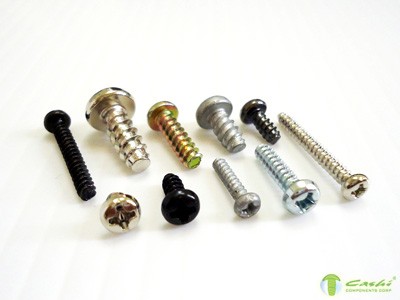
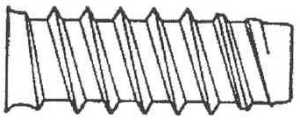
Twin-Start Threads Increase Driving Speed
TWIN TAPPING screws use two interlaced helical thread starts. With each full rotation, the screw can advance a greater axial distance, reducing the number of rotations required to reach the intended fastening depth.
Compared with a similar-size single-start screw, the twin-start structure is particularly suitable for assembly operations where fastening speed and production cycle time are important.
Reduces Fastening Time
The double-lead design allows the screw to advance more quickly into the workpiece, reducing the operating time of electric screwdrivers or automatic fastening equipment and helping improve high-volume assembly efficiency.
Actual fastening time still depends on screw length, rotational speed, workpiece material, and pilot-hole dimensions.
Forms Its Own Mating Internal Thread
When driven into a properly sized hole, the screw can use its own thread profile to cut or displace the workpiece material and form a mating internal thread along the hole wall, reducing the need for a separate tapping process.
Whether a pilot hole is required depends on the point design, workpiece material, hardness, and thickness.
No Separate Nut Required
TWIN TAPPING screws can engage directly with the internal thread formed in the workpiece. In applications with one-sided access or where a nut cannot be installed on the back side, this can reduce the need for nuts and other fastening components.
Improves Thread Lead-In Efficiency
The twin-start structure provides two thread starting positions, reducing the distance required for the threads to enter the hole and establish engagement, allowing the screw to begin driving more quickly.
Proper hole diameter, point design, and fastening angle are still important to prevent cross-threading or thread damage.
Suitable for Fast Assembly of Plastic Components
For plastic workpieces, deeper or wider twin-start thread profiles can be designed according to material characteristics to improve insertion efficiency and achieve stable engagement when the correct pilot-hole diameter and tightening torque are used.
Because plastic materials vary significantly, the appropriate thread profile should be selected according to material hardness, toughness, wall thickness, and whether glass-fiber reinforcement is present.
Can Be Used with Thin Sheet and Die-Cast Components
Depending on screw material, heat treatment, thread profile, and pilot-hole design, TWIN TAPPING screws can also be used with thin metal sheets, aluminum alloys, zinc alloys, and die-cast components.
Driving torque, stripping torque, and pull-out strength should be tested before mass production.
Simplifies the Assembly Process
Once the specified hole is prepared, a TWIN TAPPING screw can form the mating internal thread and secure the component in a single operation, reducing pre-tapping, nut installation, and multi-component assembly steps.
Suitable for High-Volume Production and Automatic Fastening
The fast-driving characteristics of TWIN TAPPING screws make them suitable for vibratory bowls, feeding tracks, and automatic screw-fastening equipment used in home appliances, electronic products, plastic housings, and other high-volume assembly lines.
For automated fastening, rotational speed, downward force, fastening depth, and shut-off torque should be properly controlled to prevent thread stripping or workpiece cracking.
Multiple Head and Point Types Available
Different head types, such as pan head, countersunk head, and hex head, can be combined with pointed, flat, cutting, or pilot point designs according to product appearance, installation tools, workpiece material, and fastening requirements.
Supports Customization Based on Drawings and Samples
TWIN TAPPING screws can be customized according to customer engineering drawings or physical samples, including head type, drive recess, thread diameter, thread pitch, lead, twin-start thread profile, overall length, point structure, material, hardness, tolerances, heat treatment, and surface treatment.
Common Applications
TWIN TAPPING screws are commonly used in:
- Plastic housings and engineering plastic components
- Electronic and electrical equipment
- Home appliances and consumer products
- Automotive and motorcycle interior components
- Telecommunications and information equipment
- Toys and consumer goods
- Thin metal sheets and sheet metal structures
- Aluminum and zinc alloy die-cast components
- Furniture and wood products
- Enclosures, cabinets, and control panels
- One-sided assembly locations or applications where a nut cannot easily be installed on the back side
- High-volume production and automated fastening lines
Key Considerations When Selecting TWIN TAPPING
Before selection, confirm whether “twin” refers to a twin-start thread, a combination of two different thread profiles, or another special structure shown on the product drawing. Different twin-thread designs may have different leads, driving speeds, and suitable materials, so selection should not be based on the product name alone.
Because twin-start screws advance more quickly, the shut-off response and torque control of the fastening tool become more important. If the rotational speed is too high or the shut-off setting is incorrect, the screw may continue rotating after the head seats against the workpiece, causing thread stripping, hole enlargement, or workpiece cracking.
Pilot-hole dimensions directly affect driving and retention performance. A hole that is too small may cause excessive driving torque, screw breakage, or workpiece cracking. A hole that is too large may result in insufficient thread engagement, free spinning, or reduced pull-out strength.
When used in plastic components, sufficient boss wall thickness and bottom clearance should be provided. Excessive screw diameter, excessive engagement depth, or excessive torque may cause boss expansion, stress whitening, or cracking.
For metal or die-cast components, the screw should have sufficient hardness relative to the workpiece material while maintaining adequate core toughness to reduce the risk of thread wear or brittle screw fracture.
TWIN TAPPING screws are not intended for unlimited repeated assembly and disassembly. Repeated removal may wear the formed internal threads or enlarge the hole, reducing torque retention and pull-out strength during subsequent installation. For products requiring frequent maintenance, pre-tapped threads, threaded inserts, or other reusable fastening structures may be more appropriate.
Before mass production, driving torque, tightening torque, stripping torque, failure torque, and pull-out strength testing are recommended to confirm that the fastening process provides an adequate safety margin.


