


Closed-End Design Covers Exposed Threads
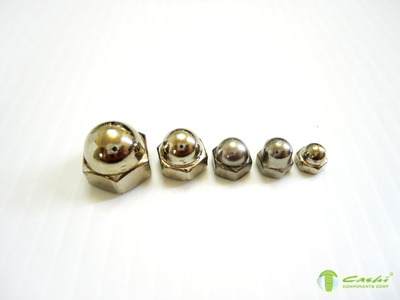
Cap nuts feature a closed rounded top that encloses the ends of screws, bolts, or threaded rods. This helps prevent sharp threaded ends from being exposed, reducing the risk of accidental contact, scratches, or snagging.
Improved Finished Appearance
The rounded cap covers exposed screw ends and creates a cleaner, more finished appearance after assembly. It is especially suitable for products where appearance is important or where the nut remains visible.
Helps Reduce Contact with Dust and Debris
The closed structure helps reduce direct contact between exposed threads and dust, chips, or other foreign materials. This helps keep the threaded area cleaner and limits environmental exposure.
Hexagonal Shape for Easy Tightening
The hexagonal body can be installed or removed using open-end wrenches, box-end wrenches, or socket tools. Its clear wrenching surfaces make it suitable for manual assembly, equipment maintenance, and production line applications.
Multiple Material and Surface Treatment Options
Depending on strength, rust resistance, corrosion resistance, appearance, and operating environment requirements, cap nuts can be produced in carbon steel, stainless steel, brass, aluminum, and other materials, with various surface treatment options.
Suitable for a Wide Range of Products and Equipment
Cap nuts are commonly used in machinery, electronic and electrical equipment, furniture hardware, sports equipment, railings and handrails, display fixtures, automotive and motorcycle components, and general industrial assemblies where fastening, safety, and appearance are all important.
Customization Based on Drawings and Samples
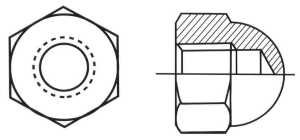
Cap nuts can be customized according to customer drawings or samples, including thread diameter, thread pitch, cap height, width across flats, internal depth, material, tolerance, and surface treatment, to meet specific assembly requirements.
Key Considerations When Selecting Cap Nuts
When selecting cap nuts, in addition to confirming the thread diameter, thread pitch, and thread standard, it is also important to check the exposed screw length and the internal depth of the cap nut.
If the screw end is too long, it may contact the inside of the cap before the nut is fully tightened, preventing proper seating or resulting in insufficient fastening. Therefore, the effective thread depth, internal clearance, and actual engagement length should be confirmed before selecting the appropriate specification.
For applications involving vibration, humidity, outdoor exposure, or corrosive environments, anti-loosening features, stainless steel materials, or suitable surface treatments should also be considered.


