


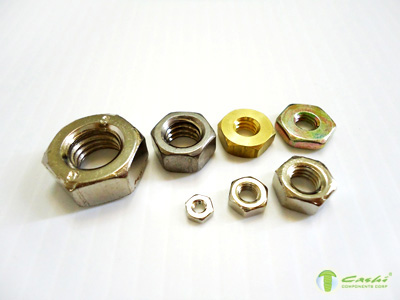
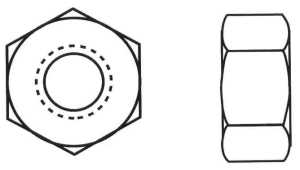
Standard Hexagonal Shape for Easy Tool Tightening
The six-sided shape is compatible with open-end wrenches, box-end wrenches, and socket tools. Its clear wrenching surfaces make it suitable for manual assembly, equipment maintenance, and production line operations.
Wide Range of Thread Types and Sizes
Metric, imperial, coarse-thread, and fine-thread specifications can be selected according to product requirements and matched with corresponding screws and bolts to meet the needs of different industries and mechanical designs.
Materials and Surface Treatments for Different Environments
Different metal materials and surface treatments can be selected based on strength, rust resistance, corrosion resistance, electrical conductivity, appearance, and cost requirements, improving product suitability for specific operating environments.
Simple Structure with Wide Application
Hexagon nuts can be used for component fastening, panel joining, mechanical assembly, and equipment installation. They are widely applied in electronics, electrical equipment, machinery, automobiles and motorcycles, furniture, construction hardware, and general industrial products.
Suitable for Mass Production and Automated Assembly
With a standardized shape that is easy to position, hexagon nuts can be used with sockets, pneumatic tools, and automated fastening equipment to improve efficiency and consistency in high-volume assembly operations.
Customization Based on Drawings and Samples
In addition to standard specifications, hexagon nuts can also be evaluated and developed according to drawings, samples, material requirements, dimensions, tolerances, thread pitches, and surface treatment requirements to meet specific product structure needs.
Key Points to Confirm When Selecting Hexagon Nuts
Before selection, confirm the screw thread diameter, thread pitch, and whether the thread is metric or imperial to avoid thread mismatch, cross-threading, or damage to the internal threads. The appropriate material, strength grade, and surface treatment should also be selected according to the load, vibration, temperature, humidity, and corrosive conditions of the fastening location.
For products used in continuously vibrating environments or applications where loosening may occur, it is recommended to further evaluate the use of washers, thread-locking adhesive, lock nuts, or other anti-loosening structures.


