


Provides Component Joining and Fastening
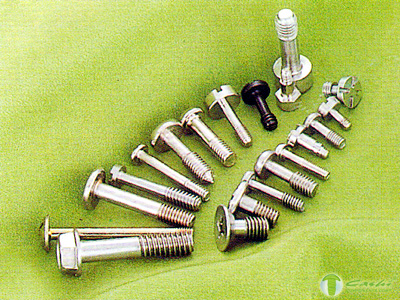
Captive Screws use external threads to engage with nuts or internally threaded holes, connecting two or more components and maintaining them in the specified position. Threaded fastening is one of the most common joining methods used in machinery and product assembly.
Generates Clamping Force Through Preload
When tightened, the screw develops axial tension, causing the screw head, nut, or threaded hole to apply clamping force to the joined components. Pressure and friction between the mating surfaces then help maintain the assembled condition.
Actual clamping force should be evaluated according to screw size, strength, tightening torque, and friction conditions.
Allows Disassembly and Reassembly
Compared with welding, riveting, or permanent adhesive bonding, threaded fastening can generally be disassembled using appropriate tools, making equipment maintenance, component replacement, product upgrades, and subsequent inspections easier.
Whether a screw is suitable for repeated use still depends on whether it has yielded, the condition of the threads, and any anti-loosening structure used.
Multiple Thread Types for Different Workpieces
Machine threads, self-tapping threads, coarse threads, fine threads, high-low threads, and other special thread profiles can be selected according to the mating component, allowing Captive Screws to be used with metals, plastics, die-cast parts, wood, and other materials.
Multiple Head Types for Different Installation Spaces
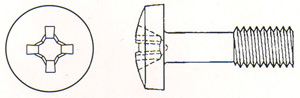
Pan heads, countersunk heads, hex heads, socket heads, flange heads, and other head styles can be selected according to tool access, product appearance, and contact-surface requirements.
Countersunk heads are suitable where the screw head needs to sit flush with the workpiece surface, while hex and socket heads are generally more suitable for applications requiring higher tightening torque.
Can Be Used with Nuts or Driven Directly into the Workpiece
Machine-thread Captive Screws can be used with nuts or pre-tapped holes, while self-tapping types can form mating threads within a suitable hole, reducing the need for separate nuts and certain pre-tapping operations.
Can Withstand Loads in Multiple Directions
Depending on screw material, diameter, strength, and joint design, Captive Screws can be used to withstand axial tension, shear, vibration, and certain bending loads.
Critical structures should be evaluated based on actual load calculations rather than screw outside diameter alone.
Helps Maintain Component Position
Captive Screws can be used together with locating holes, smooth shank sections, shoulders, sleeves, or locating pins to maintain specified component positions and spacing.
Because ordinary threaded holes generally include assembly clearance, dedicated locating features should be used where high-precision positioning is required.
Compatible with Multiple Anti-Loosening Designs
Captive Screws can be combined with thread-locking compounds, nylon patches, under-head serrations, spring washers, special thread profiles, or other anti-loosening structures to help reduce loosening caused by vibration and repeated operation.
Anti-loosening features do not replace correct tightening torque or preload management.
Simplifies Product Assembly
Standardized screws can be installed using common tools and automatic fastening equipment, reducing the need for special machining and complex assembly processes while improving production efficiency and parts management.
Suitable for High-Volume Automated Production
Captive Screws with consistent specifications can be used with vibratory bowls, feeding tracks, robotic systems, and automatic screw-fastening equipment, making them suitable for high-volume assembly of electronics, home appliances, automotive products, and machinery.
Multiple Strength Grades and Materials Available
Depending on product load, rust resistance, corrosion resistance, electrical conductivity, weight, and operating environment, Captive Screws can be manufactured from carbon steel, alloy steel, stainless steel, copper, aluminum, or other materials.
Customization Based on Drawings and Samples
Captive Screws can be customized according to customer engineering drawings or physical samples, including head type, drive recess, thread diameter, thread pitch, overall length, shank structure, point design, material, strength, tolerances, heat treatment, and surface treatment.
Common Applications
Captive Screws are commonly used in:
- Machinery and industrial equipment
- Automotive and motorcycle components
- Electronic and electrical equipment
- Home appliances and consumer products
- Enclosures, cabinets, and sheet metal structures
- Automation equipment and robotics
- Motors, fans, and pumps
- Telecommunications and information equipment
- Furniture and architectural hardware
- Instruments and precision equipment
- Rail, conveying, and material-handling equipment
- Plastic housings and die-cast components
- Assemblies requiring maintenance, disassembly, or component replacement
- Mass-production and automated fastening lines
Key Considerations When Selecting a Captive Screw
Before selection, confirm the material, thickness, hole dimensions, internal thread specifications, load direction, vibration level, operating temperature, and corrosion environment of the joined components. Screw size, strength, and surface treatment should then be selected according to actual operating conditions.
The thread diameter, thread pitch, and thread tolerances of the screw and mating internal thread must match. Screws of different standards or thread pitches should never be forced together, as this may cause cross-threading, seizure, thread stripping, or permanent thread damage.
Effective thread engagement length should be determined according to the strength of the internal thread material. Aluminum alloys, plastics, and other softer materials generally require greater thread engagement to prevent the internal threads from stripping before the screw reaches its intended load.
Insufficient tightening torque may fail to generate adequate clamping force, allowing joint movement or loosening under vibration. Excessive torque may cause screw yielding, breakage, thread stripping, or workpiece deformation.
For structures subjected to transverse shear loads, positioning should not rely solely on contact between the screw threads and the hole. Where necessary, locating pins, precision smooth shanks, bushings, or other shear-load-supporting features should be used.
For equipment exposed to vibration, impact, temperature cycling, or repeated loading, screw preload, anti-loosening methods, and settlement of the mating surfaces should be evaluated to prevent loss of clamping force over time.
For outdoor, coastal, humid, or chemical environments, screw and workpiece materials, surface treatments, and the risk of galvanic corrosion between dissimilar metals should also be evaluated.
Before mass production, tightening torque, clamping force, tensile strength, shear strength, stripping performance, failure torque, vibration resistance, and durability testing are recommended to confirm that the screw specifications and assembly parameters meet actual application requirements.


