


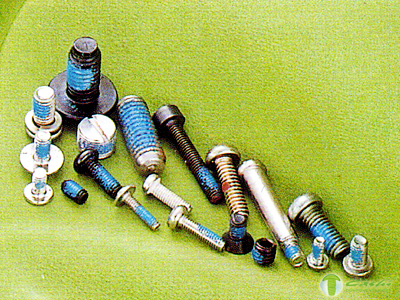
Helps Reduce Loosening Caused by Vibration
The anti-loosening structure increases resistance to reverse rotation, helping reduce the possibility of threaded joints gradually loosening due to equipment vibration, reciprocating motion, or external impact.
Actual anti-loosening performance is affected by preload, joint settlement, thread tolerances, load direction, and vibration frequency.
Increases Thread Friction
Nylon patches, pre-applied thread-locking compounds, deformed threads, or special thread profiles can generate additional friction between the screw and mating internal threads, increasing the rotational torque required during installation and removal.
This type of design is suitable for applications where disassembly must remain possible while reducing the likelihood of the screw backing out on its own.
Helps Maintain Fastening Preload
An appropriate anti-loosening structure can help maintain the clamping condition after tightening and reduce the loss of fastening force caused by vibration, micro-movement, or compression of the joined materials.
An anti-loosening feature does not replace correct tightening torque. Adequate and stable preload must still be established during assembly.
Multiple Anti-Loosening Methods Available
Depending on the application, options can include nylon patches, pre-applied thread-locking compounds, serrations beneath the head, pre-assembled washers, special thread profiles, or combined anti-loosening structures to accommodate different vibration levels, installation spaces, and disassembly requirements.
Pre-Applied Thread-Locking Compound Simplifies Assembly
Applying thread-locking material to a specified section of the thread in advance can eliminate the need for manual adhesive application during assembly, reducing missed application, inconsistent coating positions, and variations in applied quantity.
The curing method, shelf life, temperature resistance, and chemical resistance of the pre-applied material should be confirmed according to its specifications.
Nylon Patch Provides Continuous Prevailing Torque
A nylon patch or nylon locking element is compressed as the screw is driven into the mating thread, generating frictional resistance against the internal threads. Certain designs allow disassembly and a limited number of reuse cycles.
Prevailing torque may gradually decrease after repeated use, so the allowable number of reuse cycles should be determined through testing.
Serrations Beneath the Head Increase Surface Engagement
Serrations beneath the screw head can engage with a metal workpiece surface, increasing friction and mechanical bite between the screw head and workpiece and reducing the possibility of relative movement.
Because the serrations may leave marks on the workpiece, this structure may not be suitable for all cosmetic surfaces, coated surfaces, or softer materials.
Pre-Assembled Washers Can Reduce Component Count
Anti-loosening screws may be combined with spring washers, toothed washers, or other locking washers to create an integrated fastener assembly, reducing the risk of missing or incorrectly installed components.
Suitable for Automated Fastening
Screws with pre-applied nylon patches, thread-locking compounds, pre-assembled washers, or other integrated anti-loosening structures can be used directly with feeding and automatic fastening systems, reducing the need to add separate locking materials or components on the assembly line.
Automated production should still monitor installation torque, seating torque, final torque, and fastening depth.
Can Be Selected According to Disassembly Requirements
For permanent fastening applications, high-strength thread-locking compounds or non-reversible locking structures may be evaluated. For equipment requiring maintenance and disassembly, nylon patches, friction-based mechanical designs, or other removable locking methods may be more suitable.
Suitable for Various Vibration-Prone Equipment
Nylon Patch Screws and other anti-loosening fasteners can be used in motors, fans, pumps, vehicles, machinery, and automation mechanisms exposed to vibration or repeated operation.
Before selection, vibration direction, frequency, amplitude, temperature, and external loads should be evaluated.
Multiple Materials and Surface Treatments Available
Depending on mechanical strength, rust resistance, corrosion resistance, electrical conductivity, and operating environment, carbon steel, alloy steel, stainless steel, or other materials can be selected together with suitable surface treatments and anti-loosening materials.
Customization Based on Drawings and Samples
Nylon Patch Screws can be customized according to customer engineering drawings or physical samples, including head type, drive recess, thread diameter, thread pitch, overall length, anti-loosening position, patch area, serration profile, washer configuration, material, hardness, tolerances, and surface treatment.
Common Anti-Loosening Designs
Pre-Applied Thread-Locking Type
Thread-locking material is pre-applied to a specified area of the thread. After installation, the material reduces the possibility of self-loosening through curing, adhesion, or increased frictional resistance.
Nylon Patch Type
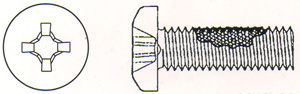
Nylon material is applied to a localized section of the thread. As the screw is installed, the nylon is compressed and fills part of the thread clearance, generating continuous frictional resistance.
Serrated Under-Head Type
Radial serrations, saw-tooth serrations, or other anti-slip patterns are formed beneath the screw head to provide auxiliary anti-loosening performance through friction and mechanical engagement with the workpiece surface.
Special Thread Profile
Triangular threads, deformed threads, eccentric threads, or other special thread profiles can be used to increase localized contact pressure and friction between mating threads.
Pre-Assembled Washer Type
Spring washers, toothed washers, or other locking washers can be pre-assembled with the screw to reduce component count and provide auxiliary anti-loosening performance.
Common Applications
Nylon Patch Screws and anti-loosening screws are commonly used in:
- Automotive and motorcycle components
- Motors, fans, and pumps
- Machinery and transmission components
- Automation equipment and robotics
- Electronic and electrical equipment
- Home appliances and consumer products
- Telecommunications and information equipment
- Enclosures, cabinets, and sheet metal structures
- Rail, conveying, and material-handling equipment
- Sports equipment and furniture hardware
- Outdoor equipment and engineering structures
- Assemblies exposed to vibration, impact, or repeated operation
Key Considerations When Selecting a Nylon Patch Screw
Before selection, confirm the equipment’s vibration level, load direction, screw dimensions, mating materials, operating temperature, corrosive environment, and expected number of assembly and disassembly cycles, then select the appropriate anti-loosening method.
A Nylon Patch Screw still requires the correct tightening torque. Insufficient torque may fail to generate adequate preload, while excessive torque may cause thread stripping, screw yielding, breakage, or workpiece deformation.
Nylon patches, pre-applied thread-locking compounds, and other friction-based structures increase installation torque. When setting fastening tools, the torque required to overcome prevailing resistance should be distinguished from the torque that actually generates clamping force, preventing a false indication that the screw has already been fully tightened.
Before using a pre-applied locking screw, make sure the thread surface is free from excessive grease, dust, or other contaminants that could affect the adhesion, curing, or friction performance of the anti-loosening material.
Nylon and resin-based anti-loosening materials have specific operating temperature ranges. High temperatures, low temperatures, oils, solvents, or chemical environments may cause the materials to soften, become brittle, swell, or lose their intended function.
Serrated under-head designs may damage painted, plated, or anodized surfaces and may also affect conductivity, corrosion resistance, or appearance requirements. The workpiece surface should therefore be evaluated before this type of design is selected.
If repeated assembly and disassembly are required, confirm whether the anti-loosening structure is reusable. Nylon patches, thread-locking coatings, or serrated structures may wear after removal, resulting in lower prevailing torque during subsequent installation.
For high-vibration, high-temperature, high-load, or safety-critical joints, anti-loosening performance should not be judged solely by the product name. Before mass production, installation torque, removal torque, reuse performance, axial load, transverse vibration, and durability testing are recommended to confirm that the product meets actual operating requirements.


